
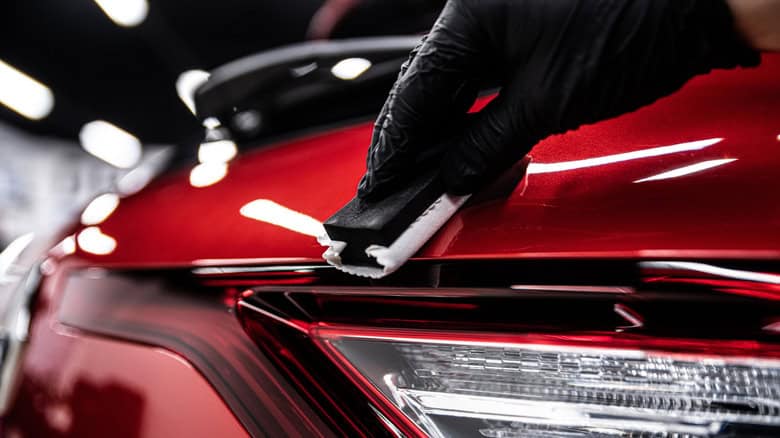
Your vehicle’s paint endures constant assault from environmental contaminants that regular washing simply can’t remove. After 24 years of detailing vehicles across Arizona’s challenging climate, we’ve seen how proper clay bar treatment can transform even the most contaminated paint surfaces. Whether you’re dealing with Phoenix dust storms, industrial fallout, or stubborn road grime, understanding clay bar treatment is essential for maintaining your vehicle’s appearance and protecting your investment.
A clay bar treatment is a specialized decontamination process that removes bonded contaminants from your vehicle’s paint surface using a malleable clay compound and proper lubrication. Unlike washing, which only removes loose dirt and debris, clay bar treatment extracts embedded particles that have chemically or mechanically bonded to your paint’s clear coat.
These contaminants—including brake dust, industrial fallout, tree sap, tar, and Arizona’s notorious dust—create a rough surface that feels gritty to the touch and prevents proper adhesion of protective products like wax, sealants, or ceramic coatings. In Arizona’s harsh environment, where temperatures regularly exceed 115°F and dust storms can deposit layers of contamination overnight, clay bar treatment becomes even more critical for maintaining paint health.
The simplest way to determine if your vehicle needs clay bar treatment is the plastic baggie test. Place a thin plastic sandwich bag over your clean, wet hand and gently run it across a washed paint surface. If the bag catches or feels rough despite the car being freshly washed, you have bonded contaminants that require clay bar removal.
Pay special attention to horizontal surfaces like the hood, roof, and trunk, which collect the most contamination. In our experience serving Mesa and Scottsdale customers, vehicles parked outdoors in Arizona often require clay bar treatment every 3-4 months due to intense environmental exposure.
Clay bar treatment excels at removing specific types of contamination:
What clay bar removes:
What clay bar doesn’t remove:
Understanding this distinction prevents unrealistic expectations and helps determine when additional services like paint correction and scratch removal are necessary.
Proper clay bar treatment immediately restores the glass-smooth feel your paint should have. Contaminated paint feels rough and looks dull because particles create microscopic shadows and prevent light from reflecting uniformly. After claying, paint exhibits dramatically improved gloss and depth, often surprising customers with how much contamination was actually present.
Bonded contaminants act as barriers between your paint and protective products, preventing proper adhesion and dramatically reducing durability. Clay bar treatment creates the clean surface necessary for maximum bonding of any protective coating. This is particularly crucial for ceramic coating applications, where surface preparation directly determines coating longevity and performance.
At our Mesa and Scottsdale locations, we never apply ceramic coatings without proper decontamination because contaminated surfaces can reduce coating life by 50% or more.
If your vehicle requires paint correction to remove swirl marks or scratches, clay bar treatment must occur first. Attempting to polish over contaminated paint simply moves particles around, potentially creating additional marring and preventing effective defect removal. Clean paint allows polishing compounds to work properly and produces superior correction results.
This preparation step is one of the many benefits of professional car detailing that ensures optimal results from any subsequent services.

Improper clay bar technique can create micro-scratches or marring, particularly on soft paint systems. Common causes include insufficient lubrication, excessive pressure, contaminated clay, or working in direct sunlight. In Arizona’s intense heat, paint surfaces become more vulnerable to marring, making proper technique and timing essential.
Always work in shade, use abundant lubrication, and apply minimal pressure. The clay should glide effortlessly across the surface—if you feel resistance, add more lubricant or knead the clay to expose a clean surface.
Avoid clay bar treatment on matte or satin paint finishes, as it will alter the intended texture and create unwanted gloss. Fresh paint (less than 30 days old) requires special consideration, as new clear coats may still be curing and vulnerable to damage. Some luxury vehicles have particularly soft clear coats that require ultra-gentle clay grades and expert technique.
Paint protection film (PPF) and vinyl wraps require modified clay bar techniques and specific products. While contamination removal is possible, aggressive claying can damage wrap edges or create adhesion issues. Always test in an inconspicuous area and follow manufacturer guidelines.
Arizona’s extreme climate creates unique challenges for clay bar treatment. Avoid working in direct sunlight or when surface temperatures exceed 80°F, as rapid lubricant evaporation can cause clay to stick and mar the paint. Early morning or evening hours provide optimal conditions, which is why our mobile detailing service operates from 7:00 AM to accommodate Arizona’s climate challenges.
Understanding why ceramic coating is essential for Arizona’s harsh climate helps explain why proper surface preparation through clay bar treatment becomes even more critical in our environment.
Traditional clay bars offer superior contamination removal and tactile feedback but require more skill and can create more marring if used incorrectly. Synthetic clay mitts and towels provide easier use and reduced marring risk but may not remove heavy contamination as effectively.
For Arizona conditions, we typically recommend medium-grade synthetic clay mitts for regular maintenance and traditional clay bars for heavy decontamination after dust storms or extended outdoor storage.
Proper lubrication is critical for safe clay bar treatment. Dedicated clay lubricants provide optimal slip and cleaning ability, while quality detail sprays offer convenience for light contamination. Avoid household soaps or inadequate lubrication, which can cause clay to grab and mar the paint.
Chemical decontamination should precede clay bar treatment for optimal results. Iron fallout removers dissolve embedded metal particles, while tar and sap removers soften stubborn organic contamination. This two-step approach reduces clay bar work time and minimizes marring risk.
Quality accessories ensure safe and effective treatment:
Begin with thorough pre-washing to remove loose dirt and debris. Follow with proper contact washing using the two-bucket method—one bucket for soapy water, another for rinsing your wash mitt. This prevents recontamination during the washing process and ensures the cleanest possible surface for clay bar treatment.
Understanding what detailing a car means helps appreciate why this systematic approach produces superior results.
Apply iron fallout remover to the entire vehicle, allowing 3-5 minutes of dwell time before rinsing. The color-changing reaction indicates iron particle dissolution. Follow with tar and sap remover on affected areas, gently agitating with a microfiber towel before rinsing clean.
Knead clay until pliable and form into a flat, palm-sized disk. Working on 2×2 foot sections, spray generous amounts of lubricant and gently glide the clay across the surface using straight-line motions. Apply only enough pressure to maintain contact—excessive force increases marring risk.
Regularly inspect the clay surface for contamination pickup, folding or kneading to expose clean clay when the working surface becomes dirty. Contaminated clay will grab and potentially scratch the paint, so frequent clay maintenance is essential.
After completing each section, remove clay residue with fresh lubricant and a clean microfiber towel. Thoroughly dry the vehicle and inspect under good lighting to ensure complete contamination removal and verify no marring has occurred.
If light marring is visible after claying, a light polish application will restore perfect clarity. Follow immediately with your chosen protection—wax, sealant, or ceramic coating—to protect the newly cleaned surface. Decontaminated paint accepts protection products dramatically better than contaminated surfaces.
Clay bar treatment creates the perfect foundation for protective products. Traditional carnauba wax provides easy application and warm appearance but requires frequent reapplication. Synthetic sealants offer improved durability and weather resistance—crucial for Arizona’s extreme UV exposure. Ceramic coatings provide maximum protection and self-cleaning properties, making them ideal for Arizona’s challenging environment.
Our comprehensive ceramic coating guide details protection options and their specific benefits for Arizona conditions. Understanding how long ceramic coatings last helps determine the best protection strategy for your vehicle.
Proper maintenance washing extends the time between clay bar treatments. Use quality shampoo, the two-bucket method, and adequate lubrication during washing. Weekly washing prevents heavy contamination buildup that requires aggressive clay bar treatment.
If you’re dealing with mineral deposits, our guide on removing water spots provides additional decontamination techniques that complement clay bar treatment.
Arizona’s harsh environment typically requires clay bar treatment every 3-4 months for daily drivers parked outdoors. Garage-stored vehicles may extend this to 6 months, while vehicles with ceramic coatings often require treatment only twice yearly due to the coating’s self-cleaning properties and contamination resistance.
Perform the baggie test monthly to monitor contamination levels. Additional indicators include:
DIY clay bar treatment typically requires 2-3 hours for a sedan and $30-50 in products for quality materials. However, improper technique can cause expensive paint damage requiring professional correction.
Professional clay bar treatment at Gannon Ceramic Coatings starts at $75 for cars and $100 for trucks/SUVs. Our service includes complete decontamination, proper technique, and quality assurance—protecting your investment while delivering superior results. With over two decades of experience serving Arizona vehicles, our trained technicians understand the specific challenges posed by our climate and adjust techniques accordingly.
Understanding how long car detailing takes helps you plan for professional service that delivers comprehensive results.
Select detailers with proven experience, proper insurance, and transparent pricing. Look for certifications from recognized organizations and review customer testimonials specifically mentioning clay bar services. At our Mesa auto detailing and Scottsdale auto detailing locations, we maintain XPEL certification and exclusive Nano Pro Borophene installer status, demonstrating our commitment to professional standards.
When considering mobile vs shop detailing, understand that clay bar treatment can be effectively performed in either setting with proper equipment and technique.
Clay bar treatment dramatically improves windshield clarity by removing embedded contamination that causes streaking and reduces visibility. Use light-grade clay and abundant lubrication, working in straight lines rather than circular motions. The improvement in visibility, particularly important for Arizona’s frequent dust storms, justifies the extra effort.
Brake dust creates some of the heaviest contamination on vehicles, particularly on front wheels. Clay bar treatment effectively removes embedded brake dust that chemical cleaners cannot dissolve. Chrome and polished trim also benefit from clay bar treatment, though painted trim requires careful evaluation to avoid damage.
Ceramic-coated vehicles still require periodic decontamination, but techniques must be modified to preserve coating integrity. Use lighter clay grades, increased lubrication, and minimal pressure. The coating’s hardness provides some protection against marring, but improper technique can still cause damage requiring expensive reapplication.
If you’re wondering whether ceramic coating is worth it, consider how it simplifies maintenance while still requiring proper decontamination techniques.
Synthetic alternatives offer improved safety margins for inexperienced users while reducing contamination transfer between vehicles. Traditional clay bars provide superior tactile feedback and contamination removal capability but require more skill and carry higher marring risk.
Light contamination may respond adequately to chemical decontamination alone, eliminating the need for physical clay bar treatment. This approach reduces marring risk and saves time but cannot address all contamination types. Regular chemical decontamination can extend intervals between clay bar treatments.
Skipping polishing after clay bar treatment saves time and money but may leave minor marring visible under certain lighting conditions. For daily drivers, this compromise often proves acceptable, while show cars or luxury vehicles typically benefit from polishing refinement.
Clay bar treatment represents an essential skill for maintaining your vehicle’s appearance and protecting your investment. While DIY treatment is possible with proper knowledge and technique, the risks of paint damage often justify professional service, particularly for valuable or luxury vehicles. Our experienced team at Gannon Ceramic Coatings has perfected clay bar techniques over 24 years of serving Arizona vehicles, understanding the unique challenges posed by our extreme climate.
Whether you choose DIY or professional treatment, regular decontamination keeps your paint smooth, enhances protection product performance, and maintains your vehicle’s value. For questions about clay bar treatment or to schedule professional service, contact us at 480-233-5922 or visit our Mesa or Scottsdale locations.
Ready to experience the dramatic difference proper clay bar treatment makes? Contact Gannon Ceramic Coatings today for professional decontamination services backed by over two decades of Arizona expertise. Explore our full range of services or view our customer gallery to see the transformative results we achieve.