
Water spots on your vehicle’s surface can transform a pristine paint job into a frustrating eyesore. These stubborn marks appear seemingly overnight, leaving car owners wondering how their recently washed vehicle suddenly looks neglected. Understanding the science behind water spot formation and mastering effective removal techniques will protect your investment while maintaining that showroom-quality appearance.
This comprehensive guide delivers proven methods for eliminating water spots from your car’s exterior. You’ll discover why these spots form, learn multiple removal techniques suited for different severity levels, and understand prevention strategies that keep your vehicle looking its best year-round.
Understanding Water Spots: Causes and Effects
Water spots represent one of the most common yet misunderstood automotive maintenance challenges. These circular or irregular marks develop when water containing dissolved minerals evaporates from your vehicle’s surface, leaving behind concentrated deposits that bond with the paint.
The formation process begins when water droplets land on your car’s surface during washing, rain, or sprinkler exposure. As water evaporates, dissolved minerals like calcium, magnesium, and silica become increasingly concentrated. These minerals eventually crystallize and adhere to the paint surface, creating the visible spots that resist normal washing attempts.
Temperature plays a crucial role in water spot development. Hot surfaces accelerate evaporation, allowing minerals to concentrate and bond more quickly. This explains why vehicles parked in direct sunlight develop more severe spotting than those in shaded areas.
What are Water Spots?
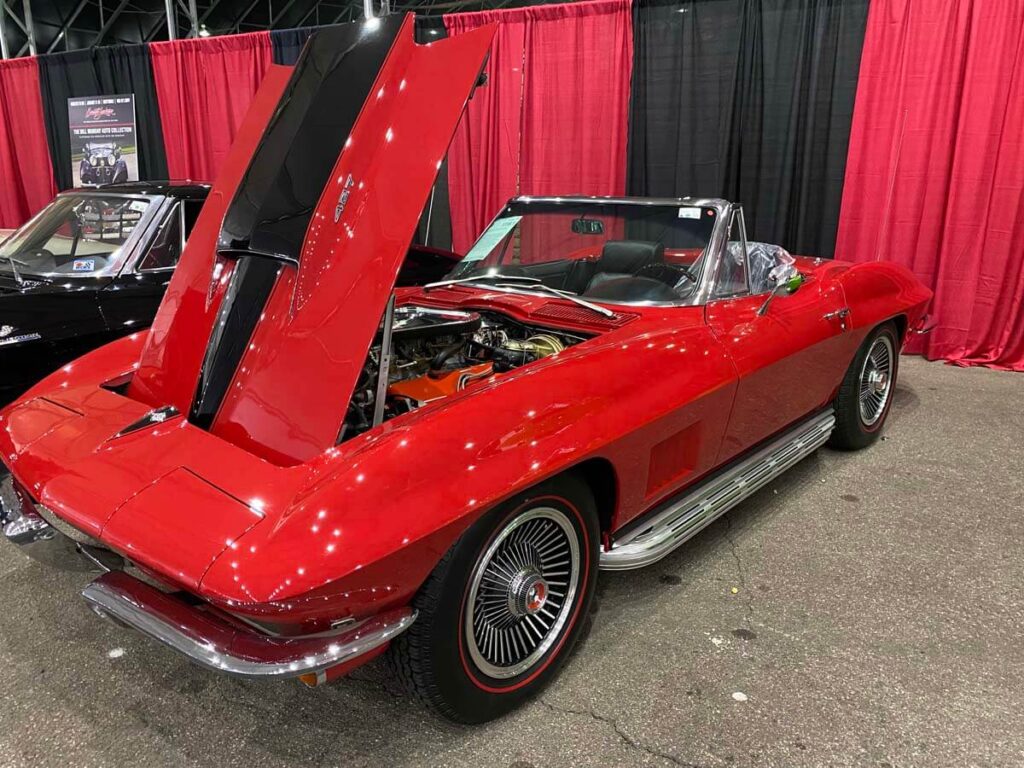
Water spots manifest as circular or irregular marks ranging from barely visible to heavily etched formations. These deposits contain various minerals depending on your local water supply, with calcium carbonate being the most common culprit in areas with hard water.
The appearance varies significantly based on mineral content and surface temperature during formation. Fresh spots often appear as light, chalky rings that feel smooth to the touch. Over time, these deposits can etch into the paint surface, creating permanent damage that requires professional correction.
Different water sources produce distinct spot characteristics. Municipal water typically contains chlorine and fluoride additives alongside natural minerals. Well water often has higher mineral concentrations, leading to more severe spotting. Rainwater, while naturally soft, picks up atmospheric pollutants that can create acidic spots requiring different treatment approaches.
Hard water areas face particular challenges due to elevated calcium and magnesium levels. These minerals form stubborn deposits that resist basic cleaning methods, requiring specialized removal techniques to restore the paint’s original appearance.
Effects of Water Spots on Car's Exterior

Water spots impact your vehicle’s appearance and long-term value in multiple ways. Surface-level spots create a hazy, dull appearance that diminishes the paint’s depth and gloss. These visual imperfections become more pronounced in direct sunlight, where they scatter light and create an uneven surface appearance.
Beyond cosmetic concerns, water spots can cause permanent paint damage. Acidic spots from polluted rainwater or mineral deposits can etch into the clear coat, creating microscopic craters that trap dirt and contaminants. This etching process compromises the paint’s protective barrier, making the surface more susceptible to future damage.
The economic impact becomes significant over time. Vehicles with extensive water spot damage show decreased resale value, as potential buyers associate these marks with poor maintenance. Professional paint correction services needed to address severe etching can cost hundreds or thousands of dollars.
Water spots also affect protective treatments like wax or ceramic coatings. These deposits can interfere with proper adhesion of protective products, reducing their effectiveness and longevity. Regular spot removal maintains the integrity of your paint protection system.
How to Remove Water Spots from Your Car
Successful water spot removal requires matching the treatment method to the spot’s severity and composition. Light surface spots respond well to gentle cleaning methods, while severe etching demands more aggressive approaches. Always start with the gentlest effective method to avoid unnecessary paint damage.
Temperature and environmental conditions significantly influence removal success. Cool, shaded conditions provide optimal working environments, as hot surfaces can cause cleaning products to evaporate too quickly, reducing effectiveness and potentially creating new spots.
Testing any removal method on an inconspicuous area first prevents widespread damage if the product proves too aggressive for your paint system. This precaution becomes particularly important when dealing with vintage or specialty paint finishes that may react differently to standard cleaning products.
Quick Rinse and Dry
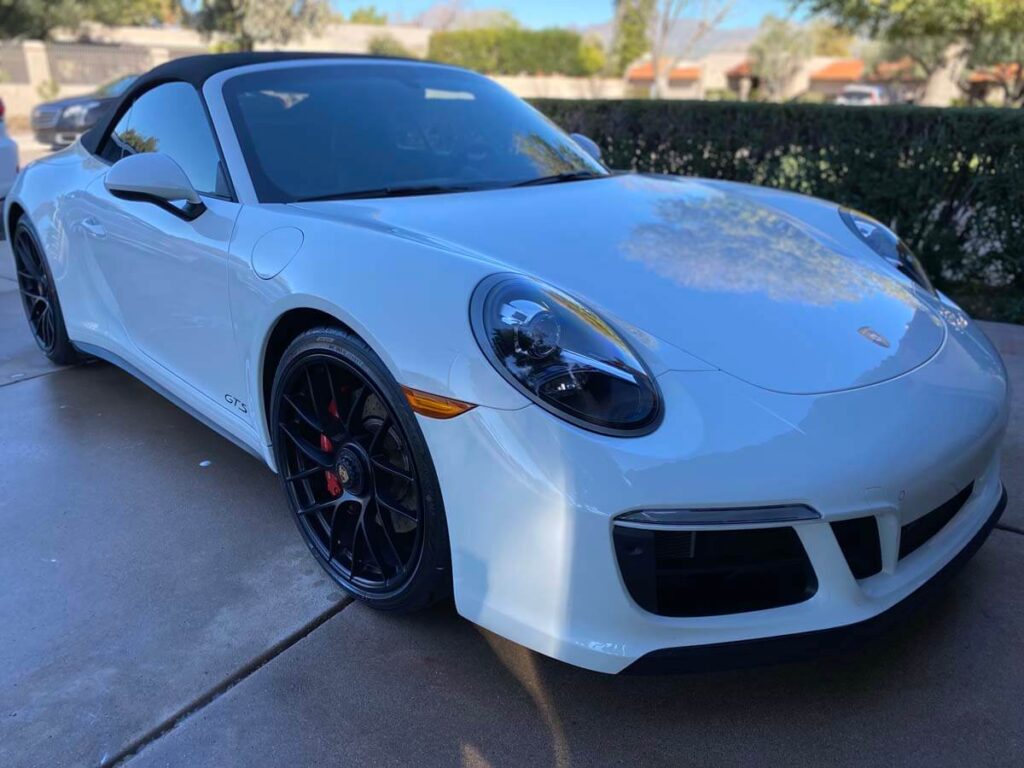
The immediate rinse and dry method works best for fresh water spots that haven’t had time to bond permanently with the paint surface. This technique prevents mineral deposits from etching into the clear coat while they remain in their initial formation stage.
Start by thoroughly rinsing the affected area with clean water to remove loose contaminants and cool the surface. Use a gentle stream rather than high pressure, which can drive particles into the paint and create scratches. Pay particular attention to areas where water naturally collects, such as around badges, trim pieces, and panel joints.
After rinsing, immediately dry the surface using a clean microfiber towel or chamois. Work systematically from top to bottom, frequently rinsing your drying tool to prevent recontamination. The key lies in preventing new water spots from forming during the drying process.
For stubborn spots that resist basic rinsing, apply distilled water to the affected area and allow it to sit for several minutes. The mineral-free water helps dissolve existing deposits while preventing new ones from forming. Follow with immediate thorough drying using the blotting method rather than dragging the towel across the surface.
Vinegar Solution
White vinegar provides an effective, affordable solution for moderate water spot removal. The mild acetic acid dissolves mineral deposits without damaging most automotive paint systems. This method works particularly well for calcium-based spots common in hard water areas.
Create a 50/50 mixture of white vinegar and distilled water in a spray bottle. The dilution prevents the acid from becoming too aggressive while maintaining cleaning effectiveness. Never use undiluted vinegar on automotive paint, as the concentrated acid can cause etching damage similar to the spots you’re trying to remove.
Apply the solution to affected areas and allow it to dwell for 2-3 minutes. The acid needs time to break down mineral deposits, but extended contact can damage the paint. Watch for any immediate adverse reactions, particularly on older or specialty paint finishes.
Gently agitate the area using a soft microfiber cloth, working in small circular motions. Avoid applying excessive pressure, as the acid should do most of the work. Rinse thoroughly with clean water immediately after treatment to neutralize the acid and prevent new spot formation.
For particularly stubborn spots, repeat the process up to three times, allowing the surface to dry completely between applications. If spots persist after multiple treatments, they may require more aggressive removal methods or professional intervention.
Clay Bar Treatment
Clay bar treatment addresses embedded contaminants that create raised water spots on the paint surface. This method mechanically removes deposits that chemical cleaners cannot dissolve, restoring smoothness to the paint surface.
Select an appropriate clay bar grade for your paint condition. Fine-grade clay works best for newer vehicles with minor contamination, while medium-grade clay handles more severe deposits. Avoid aggressive clay formulations unless dealing with extreme contamination, as they can mar the paint surface.
Thoroughly wash and dry the vehicle before clay bar treatment. Any loose dirt or debris can become embedded in the clay, creating scratches during the cleaning process. Work in shaded conditions with cool paint temperatures for optimal results.
Apply clay bar lubricant generously to both the paint surface and the clay bar itself. Never use clay on a dry surface, as this will cause scratching. Work in small sections, gently gliding the clay across the surface without applying pressure. The clay should remove contaminants through gentle contact rather than aggressive scrubbing.
Listen for changes in the clay’s movement across the surface. Initially, you may hear slight scratching sounds as the clay removes deposits. As the section becomes clean, the clay will glide smoothly and silently. Rinse the area thoroughly after treatment and inspect for any remaining spots.
Polish and Wax
Polishing removes light etching and restores paint clarity after water spot removal. This step addresses microscopic surface damage that remains after cleaning, bringing back the paint’s original depth and gloss. Choose an appropriate polish grade based on your paint’s condition and the severity of remaining defects.
Apply polish using a clean microfiber applicator pad, working in small sections to maintain proper control. Use circular motions with light pressure, allowing the polish’s abrasive particles to level the surface gradually. Over-polishing can damage the clear coat, so work systematically and inspect progress frequently.
Remove polish residue using a clean microfiber towel before it dries completely. Work quickly but thoroughly, as dried polish can create new surface imperfections. Inspect the treated area under good lighting to ensure complete spot removal and uniform surface appearance.
Follow polishing with a high-quality wax or sealant application. This protective layer prevents future water spot formation while enhancing the paint’s appearance. Apply wax in thin, even coats using circular motions, then remove according to manufacturer instructions.
The combination of polishing and waxing creates a smooth, protected surface that resists future water spot formation. Regular maintenance with quality wax products significantly reduces the likelihood of severe spot development.
Seeking Professional Detailing Services
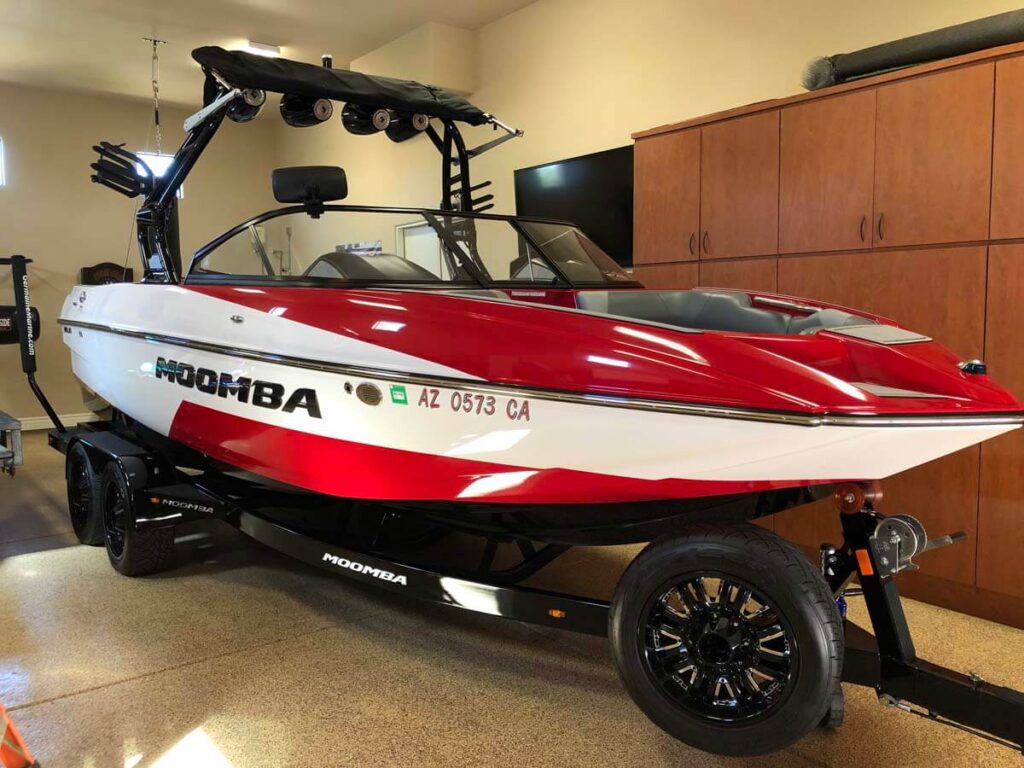
Professional detailing services become necessary when water spots have etched deeply into the paint surface or cover extensive areas. Professional detailers possess specialized tools, products, and expertise that achieve results beyond typical DIY capabilities.
Machine polishing equipment allows professionals to remove etching that hand polishing cannot address. Dual-action polishers and rotary tools, combined with professional-grade compounds, can restore heavily damaged paint surfaces. These tools require experience to use safely, as improper technique can cause irreversible damage.
Professional services often include paint thickness measurements to ensure adequate clear coat remains for correction. This scientific approach prevents over-correction that could compromise the paint’s integrity. Many shops provide detailed before-and-after documentation showing the extent of correction achieved.
Consider professional service for valuable vehicles, extensive damage, or when DIY methods prove insufficient. The investment in professional correction often costs less than repainting damaged panels and maintains the vehicle’s original finish integrity.
Preventing Future Water Spots on Your Car
Prevention strategies prove more effective and economical than repeated removal treatments. Understanding the conditions that promote water spot formation allows you to modify your maintenance routine and parking habits to minimize future occurrences.
Environmental awareness plays a crucial role in prevention. Avoid parking under sprinkler systems, tree sap areas, or locations where water naturally collects. These environments create ideal conditions for spot formation, particularly during hot weather when evaporation rates increase.
Timing your maintenance activities strategically reduces spot formation risk. Wash your vehicle during cooler parts of the day, preferably in shaded areas. Early morning or late afternoon washing prevents rapid evaporation that concentrates minerals on the paint surface.
Proper Washing Techniques

Effective washing techniques minimize water spot formation while maintaining paint health. Start by pre-rinsing the vehicle to remove loose contaminants that could scratch the surface during washing. Use a gentle stream that provides adequate coverage without creating excessive spray patterns.
Work systematically from top to bottom, washing and rinsing small sections before moving to the next area. This approach prevents soap from drying on the surface and reduces the time water remains in contact with the paint. Keep surfaces wet during the washing process to prevent premature drying.
Use the two-bucket method with one bucket for soapy water and another for rinsing your wash mitt. This technique prevents recontamination of the clean wash solution and reduces the likelihood of grinding dirt into the paint surface. Rinse your mitt frequently and replace it if it becomes heavily soiled.
Choose appropriate soap products designed for automotive use. Household detergents can strip wax protection and leave residues that attract dirt. Quality car shampoos contain lubricants that protect the paint surface while providing effective cleaning power.
Dry the vehicle immediately after washing using proper technique. Blot rather than drag drying materials across the surface to prevent scratching. Work systematically and replace drying towels as they become saturated to maintain effectiveness.
Using Water Spot Prevention Products
Specialized prevention products create barriers that resist water spot formation. These products include spray waxes, quick detailers, and ceramic coatings that provide hydrophobic properties, causing water to bead and roll off the surface rather than sitting and evaporating.
Spray waxes offer convenient application and regular maintenance capabilities. Apply these products between regular wax applications to maintain surface protection. The synthetic polymers in spray waxes create a slick surface that resists mineral deposit adhesion.
Quick detailer products serve dual purposes by cleaning light contaminants while depositing protective polymers. Use these products during weekly maintenance to remove water spots before they bond permanently with the paint surface. The lubricating properties also make them safe for regular use.
Ceramic coatings provide the most durable protection against water spots. These products create a semi-permanent barrier that resists mineral deposits and simplifies maintenance. Professional application ensures optimal performance and longevity, typically lasting 2-5 years depending on environmental conditions.
Regular application of prevention products maintains their effectiveness. Even the best protective coatings degrade over time due to environmental exposure, washing, and normal wear. Establish a maintenance schedule based on your local conditions and driving habits.
Conclusion
Water spot removal requires understanding the underlying causes and selecting appropriate treatment methods for each situation. Fresh spots respond well to gentle cleaning techniques, while severe etching demands more aggressive approaches or professional intervention.
Prevention strategies prove more effective than repeated removal treatments. Proper washing techniques, environmental awareness, and regular application of protective products significantly reduce water spot formation while maintaining your vehicle’s appearance and value.
Success depends on matching the treatment method to the spot’s severity and your paint’s condition. Always start with the gentlest effective approach and progress to more aggressive methods only when necessary. When in doubt, consult professional detailing services to avoid causing irreversible damage to your vehicle’s finish.
Regular maintenance and prompt attention to water spots prevent minor issues from becoming major problems. By implementing these strategies and techniques, you’ll maintain your vehicle’s pristine appearance while protecting your investment for years to come.